Where to look first
Under the kitchen sink, nine times out of ten. After that: a downstairs cloakroom, the cupboard holding the water meter, under the stairs, or in the garage on the wall the mains enters. In a flat it is often in a riser cupboard on the landing rather than inside the flat at all.
Making sure it is the right one
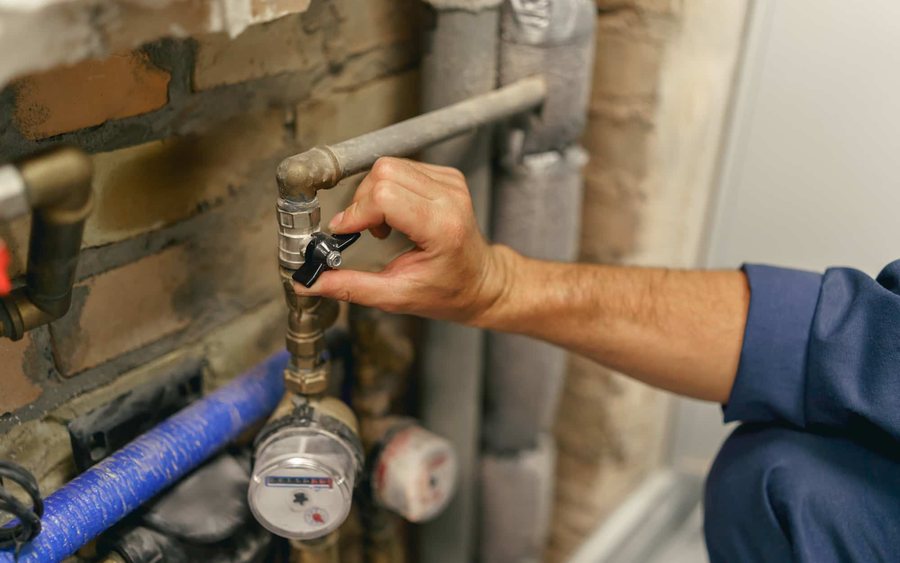
The stopcock is on the pipe that comes up out of the floor or through the wall from outside, and it is the coldest pipe in the house. Turn it fully off, then run the kitchen cold tap. If it dies within twenty seconds you have the right valve.
Other valves nearby will stop one appliance or one bathroom. Those are useful, but they are not the one you want at 2am.
Turning it once a year
Close it and open it fully, once a year. They seize shut from never moving, and the washer inside hardens. Never force a stiff one with a wrench: the body is brass and the pipe behind it is often lead or old copper, and snapping it turns a stiff valve into a flood.
If it will not move by hand, that is a twenty minute job to replace and it is worth booking rather than discovering.
The outside one, too
There is usually a second stopcock at the boundary, under a small metal or plastic cover in the path or pavement. It needs a long key rather than a hand, and it is the one that matters if the leak is between the boundary and the house.
Worth finding once and remembering, because that stretch of pipe is the homeowner’s responsibility in most cases, not the water company’s.
What to do while the water is off
The first two stop it getting worse, and the last two are what the insurer and the engineer will both ask for. All four take under five minutes.