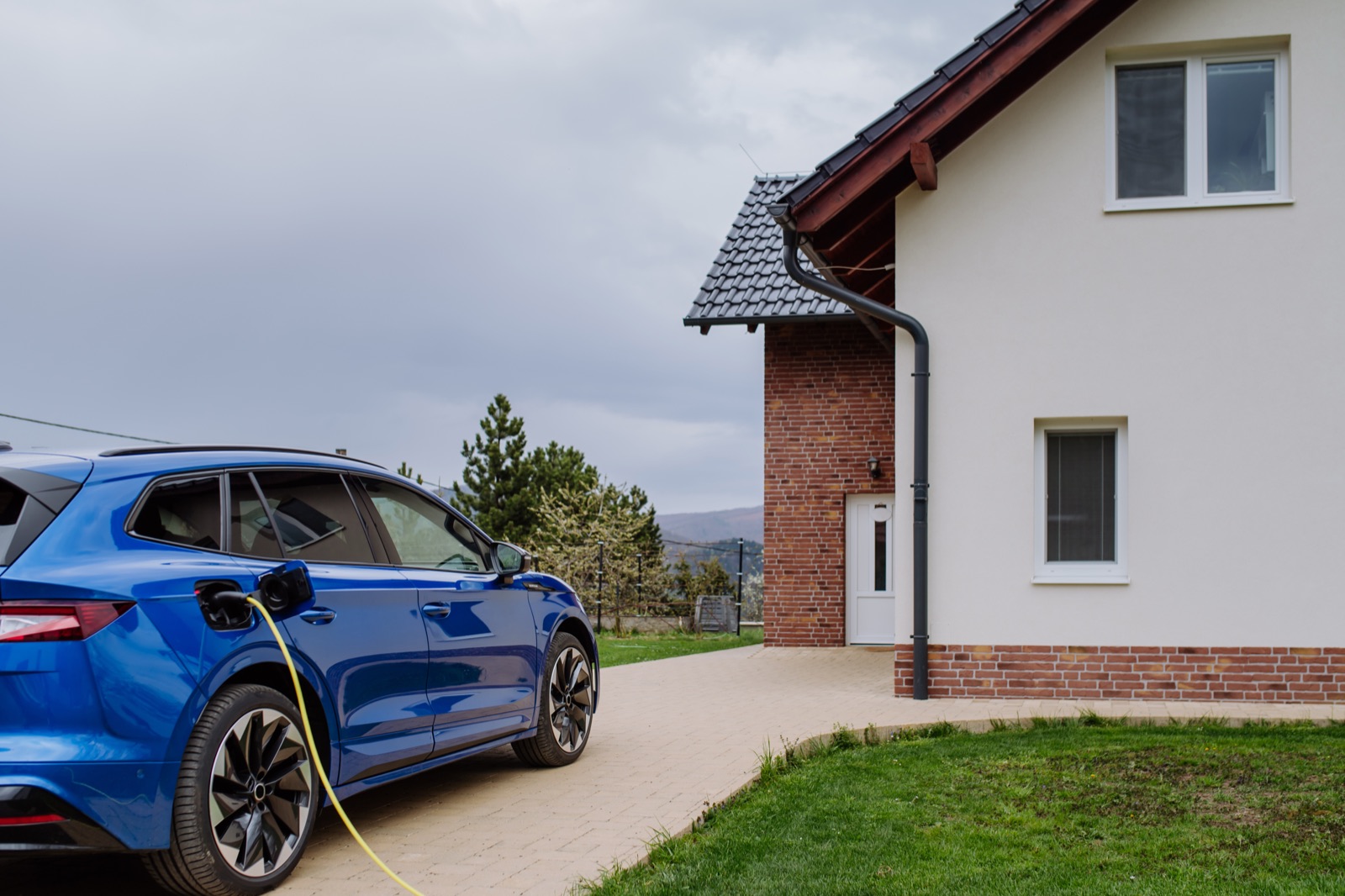
Almost every EV charger question we get is really a question about the panel. The charger itself is a simple appliance: a breaker, a run of cable, a box on the wall. What decides whether that job takes a morning or a fortnight is how much room is left in the service feeding it.
Start with the number on the main breaker
Look at the largest breaker at the top of your panel. In most homes built since the eighties it reads 100A or 200A. That figure is the ceiling for everything in the house at once, and a car charger is a big new tenant. A 48A charger draws continuously for hours, so the code requires it to be sized at 125 percent of its rated load, which means a 60A breaker for a 48A unit.
A load calculation, not a guess
Before we quote, we run a load calculation against the actual house: heating type, water heater, range, dryer, air conditioning, and now the charger. Two houses with identical panels can land on opposite sides of the line because one heats with gas and the other with resistance elements.
When the numbers do not fit
Running out of capacity is not the end of the conversation. Three routes usually open up. The first is a smaller charger: a 32A unit adds roughly 40 kilometres of range an hour, which covers most commuting patterns overnight. The second is load management, where the charger talks to a meter and backs off when the dryer and the oven are both running. The third is a service upgrade, which is the most expensive answer and the only one that also fixes the other things a full panel was going to stop you doing.
What we leave you with
Every charger we install goes on its own dedicated circuit with a labelled breaker, a documented load calculation in the handover pack, and the charger commissioned and tested against your car before we leave. If a utility upgrade is needed we handle the application and the scheduling.

Send us a photo
Open the panel door, photograph the label, and we will tell you the make, the age, and whether it needs replacing.