Published
Reading time
7 minutes
Filed under
Every boat on Pier 6 leaves with its lines already rigged, so you can rent from us without tying a single knot. But the day you need one, you need it in about four seconds.
These are the six we teach at the briefing, the job each one does on a club boat, and the one mistake we see most often with each of them. None of them takes more than a minute to learn.
The bowline makes a loop that will not slip or jam, and it unties easily even after it has held a boat against the tide all afternoon. On our boats it goes on the end of a mooring line when you pick up a buoy at Thomas Point or tie off to a piling.
The common mistake is tying it backwards so the tail ends up outside the loop. It still holds, mostly. Tie it again until the tail sits inside, every time.
Six knots, six jobs: the practice board in the dock office, where every briefing ends.
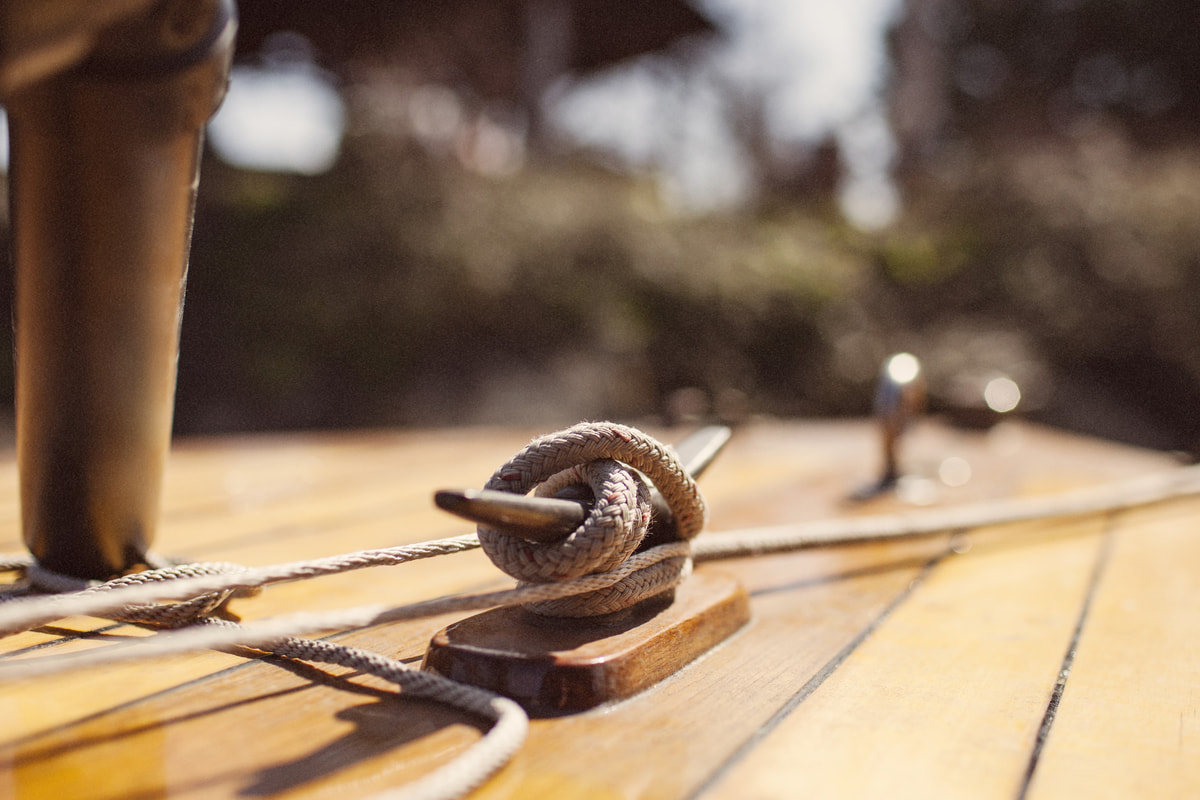
The cleat hitch is how a boat is made fast to the dock, and it is the knot you will tie most often. A full turn around the base, a figure of eight across the horns, and a single locking hitch to finish.
“If you can tie it with your eyes closed on the sofa, you can tie it on a moving boat.”
The cleat hitch is the knot instructors check before anyone leaves the pier. One extra locking hitch is fine. Three is a knot the next person cannot undo.
The clove hitch is quick to tie around a rail or a post, which makes it perfect for fenders and useless for anything that pulls hard. When the load is real, use a round turn and two half hitches instead. It holds under strain and you can still untie it with cold hands.
The figure eight goes in the end of a sheet so it cannot run out through the block. The reef knot joins two ends of the same line, around a sail cover or a bundle of fenders, and should never be trusted with more than that.
Bring your rope to the briefing and show us. Anyone who ties all six without looking gets their first coffee free.
Written by
Keep reading